
FIELD NOTE 01 · MASK, BODY, MEMORY
Topeng Tua is not simply a dance about an old man.
Topeng belongs to Bali’s masked theatre: a world of rulers, ministers, servants and comic figures through which chronicles are retold. The Old Mask is one face within that larger procession. Its expression never changes; the dancer makes time visible upon it.
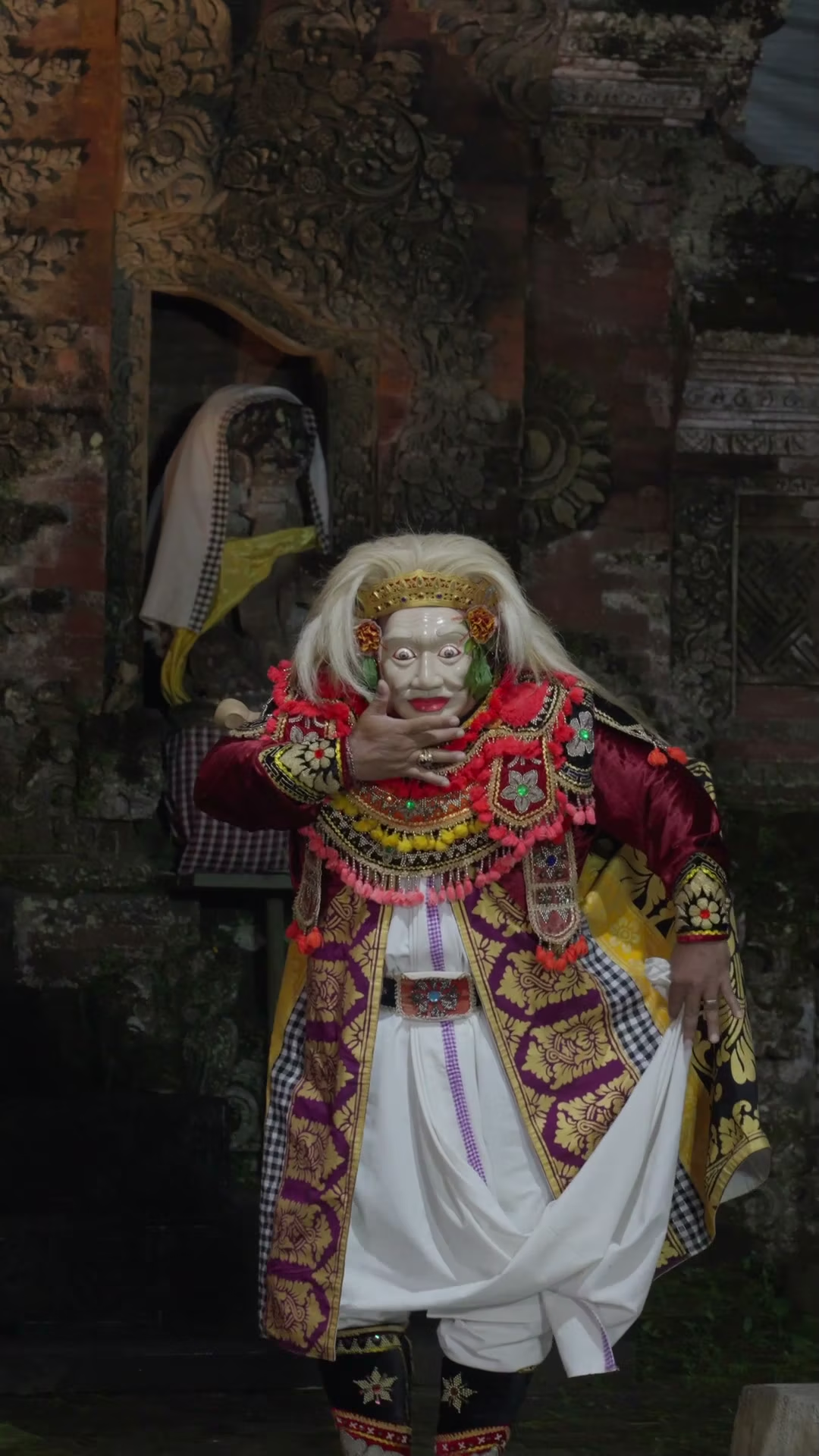
HOW TO READ THE SCENE
The mask does not illustrate old age. It sets the dancer a problem: how can a fixed face become tired, proud, suspicious or delighted? The answer is carried by knees, breath, balance, costume and the changing pressure of the gamelan.
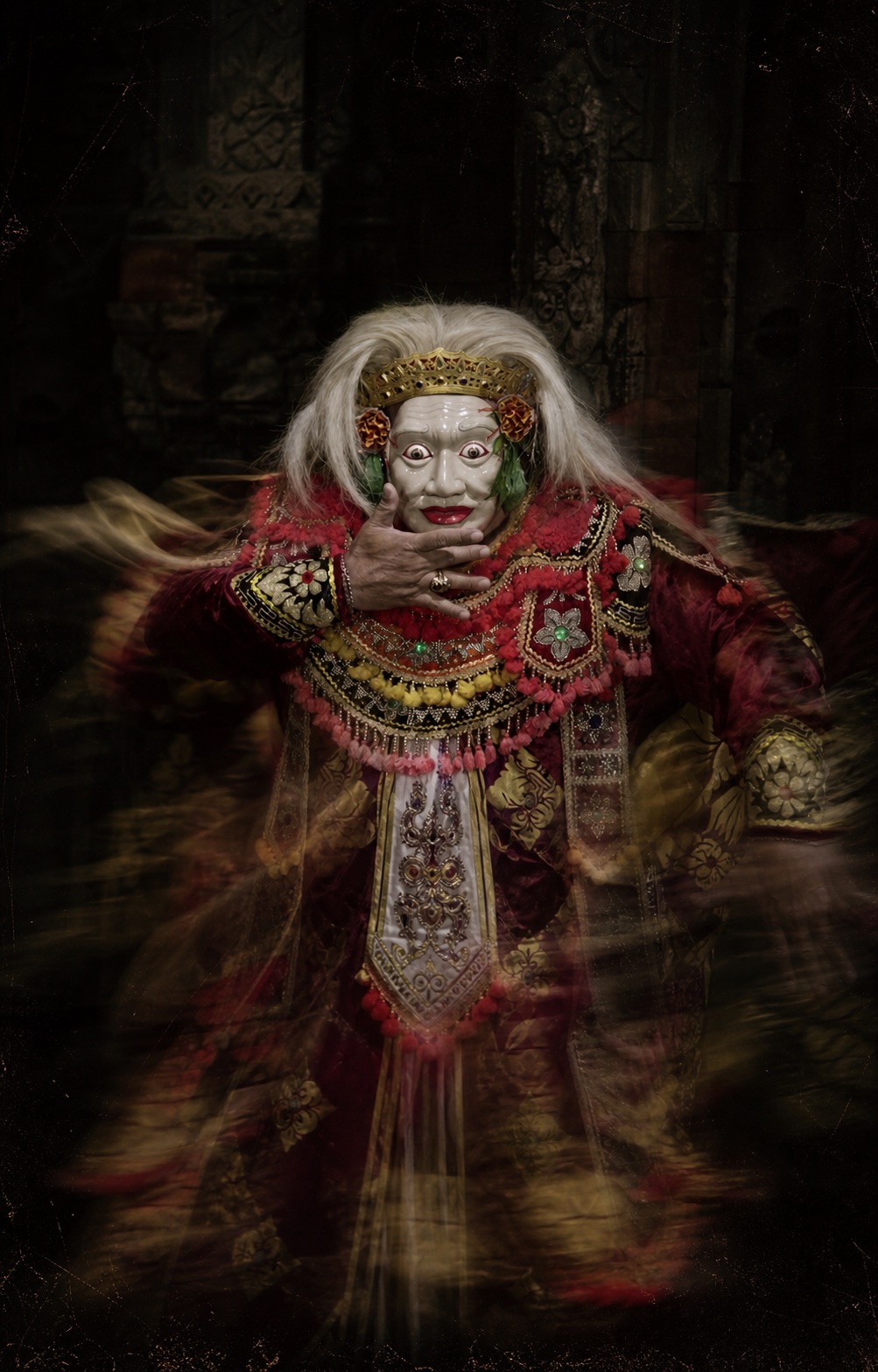
An atmospheric study inspired by Topeng Tua. It is not documentary photography of this performance.
A face from a theatre of history
Classic accounts describe Topeng as masked drama built around babad—chronicles of courts, alliances and conflict. Noble full masks remain silent while attendants may speak, interpret and disturb their dignity. These are not modern psychological portraits: each mask condenses a recognisable social type, and the story is the thread that draws the types into relation.
The body lends time to the mask
De Zoete and Spies recorded a white-haired, white-bearded elder who falters with fatigue, examines himself and searches his body with anxious care. Eiseman later describes stiff joints and uncertain balance. The humour is not decoration placed on top of technique. Fragility, vanity and persistence become rhythm, while the gamelan measures each hesitation and recovery.
Context decides what kind of event it is
Topeng has moved between temple ceremony, village theatre and staged entertainment. A 1971 official scheme placed narrative Topeng among bebali, performances accompanying ceremony; later debate showed that its status depends on function and local context. A mask cannot be labelled “sacred” or “secular” by appearance alone. One must ask where, why and for whom it is danced.
THE BAKBAKAN, GIANYAR VERSION
Dewa names the second performance of this evening Topeng Tua. Here it appears as a solo within a community-hosted cultural night: the dancer leaves the performance space, studies the guests and folds their reactions into his timing. That proximity belongs to this local presentation; it is not a rule for every Topeng Tua in Bali.
FROM THE BALI RAG LIBRARY
- Beryl de Zoete & Walter Spies, Dance and Drama in Bali, Chapter VII: Topeng (1938)
- Fred B. Eiseman Jr., Bali: Sekala and Niskala, Vol. I, “Dance in Bali” (1990)
- Michel Picard, Bali: Cultural Tourism and Touristic Culture, Chapter VI