DANCE STORY · MANUK DEWATA
Cendrawasih | The bird of the gods must first learn to meet on earth.
Bird of Paradise is not a generic picture of beauty. It is a story of approach, retreat and the moment when two lives find a shared rhythm.
CONFIRMED IN THE FULL-MOON PROGRAMME
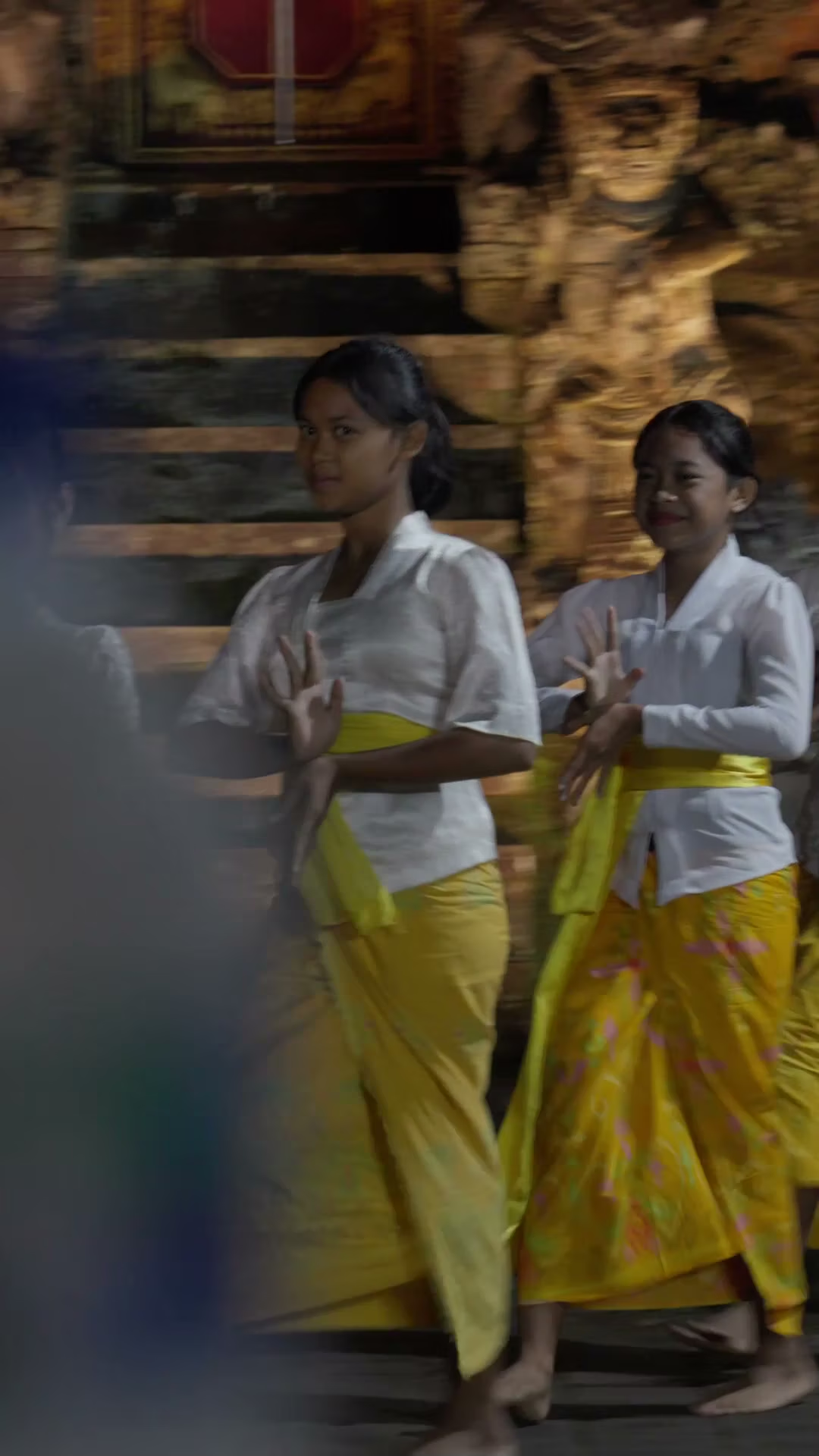
Cendrawasih — Bird of Paradise — is part of the dance programme at Bakbakan, Gianyar. This page tells the wider story carried by its name, while the local dancers remain the authority on this evening’s exact choreography.
A bird with a divine name
In Bali, the bird of paradise may be called Manuk Dewata: the bird of the gods. But Cendrawasih does not tell of a bird ascending to heaven as a divine messenger. It tells of a bird returning to earth, and of what happens when it encounters another living being there.
The dance begins from a name that sounds celestial, then brings it back to a forest clearing, a body, a glance and a response. Its splendour is not a prize carried high above the world. It is something made visible only when another bird is willing to see it.
No one can command an encounter
One bird arrives first. It cannot order the other to come closer, and it cannot possess the other through the brilliance of its feathers. It can only open its body, circle, pause, turn and wait.
Then the other bird appears. It does not immediately agree. It approaches and retreats; looks back and leaves; returns to face the first bird again. In different versions the choreography may vary, but this tension remains: beauty alone does not create a meeting. Recognition has to be answered.
Courtship is not conquest
Cendrawasih is often described as a courtship dance. That word matters. The birds pursue, test distance and circle one another until their movements begin to share a rhythm. The ending is not a victory over another body, but the possibility of moving together without losing difference.
This is why the dance is more than a graceful image of feathers. It stages a difficult and familiar human question: how can desire become attention, and attention become a relation that both sides choose?
After welcome comes recognition
Placed after Panyembrama in the evening, Cendrawasih makes a quiet continuation. Panyembrama asks how a community can welcome a stranger without giving up its own boundaries. Cendrawasih asks what happens next: how two lives, already in the same place, begin to recognise one another.
That is why it belongs in this courtyard. The night is not built around consuming a beautiful scene. It moves, step by step, from arrival to welcome, from welcome to recognition, and finally into food, music and prayer shared with the people who made the gathering possible.
A NOTE ON THIS BAKBAKAN, GIANYAR VERSION
The title Cendrawasih is now confirmed for the programme. Before adding details about performer roles, musical titles or individual movement sequences, we will verify them with the dancers and gamelan players who perform this version.
STORY BACKGROUND