
FIELD NOTE 02 · TEMPLE, VILLAGE, RELATION
A Balinese village is also a map of obligations.
Pura Dalem Ageng Bakbakan is not merely the backdrop to the evening. To understand why guests enter a temple before sitting down, it helps to see the village not only as houses and roads, but as relationships maintained through temples, ancestors, territory and shared work.
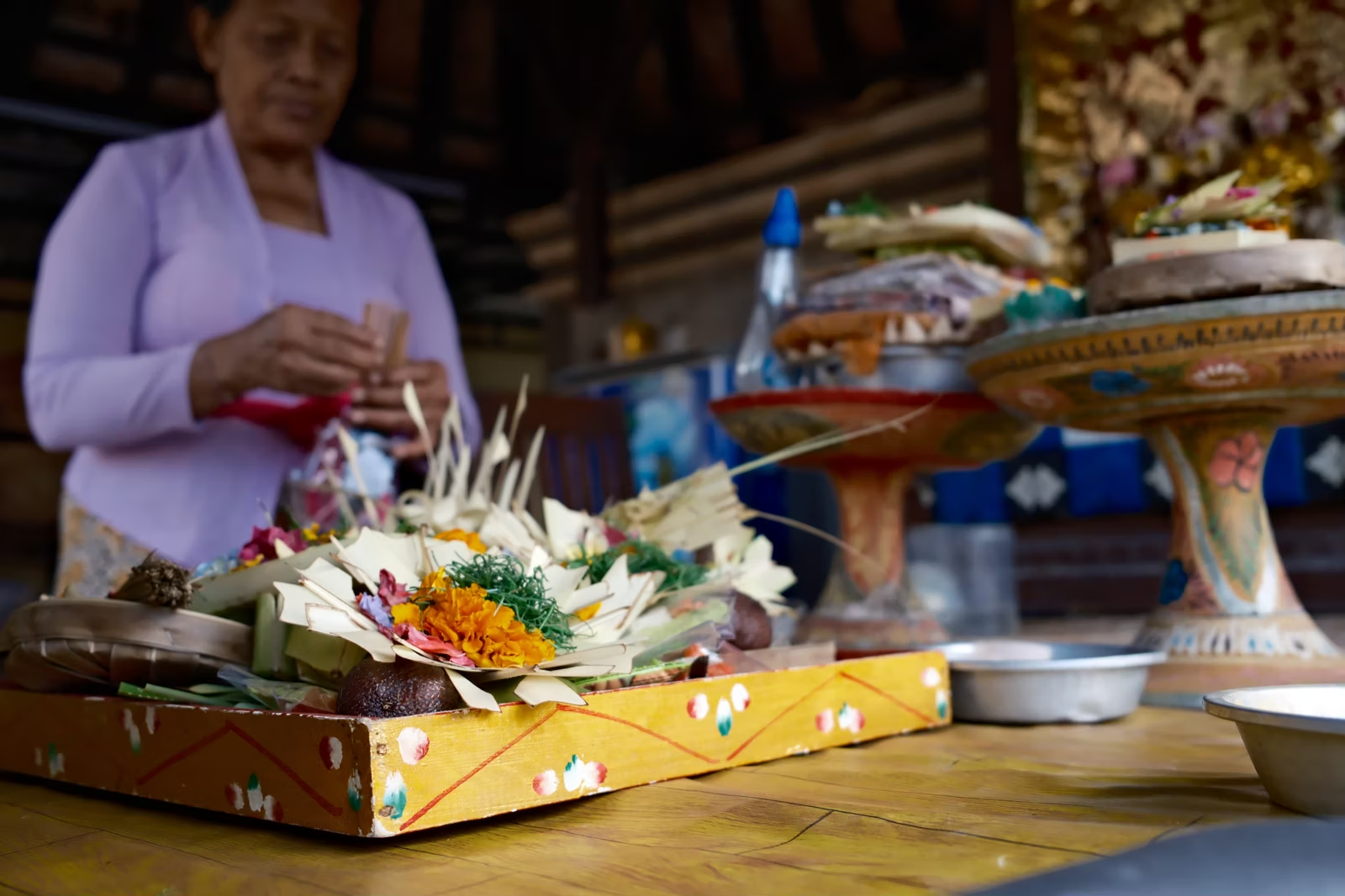
THE THRESHOLD CHANGES THE GUEST
Guests do not arrive first as an audience facing a stage. They enter a place for which the community remains responsible, follow the mangku’s guidance, and only then return to the courtyard. The sequence turns attendance into a small act of relationship.
Desa and banjar are not the same thing
Picard describes the desa less as a line on a map than as a religious congregation collectively responsible for a temple network. The banjar is the residential community through which legal, practical and ceremonial work is organised. In Bakbakan, three participating banjar bring those working relationships together to prepare and host the evening.
Pura Dalem belongs to a larger village order
In broad accounts of the Kayangan Tiga, Pura Puseh, Pura Desa and Pura Dalem orient the village toward origins, collective life and the unsettled domain of death and purification. This does not make a Pura Dalem an “evil temple.” It marks one part of a relationship through which a community holds together life, ancestors, death and territory.
The specific temple cannot be reduced to a template
Dewa confirms the name Pura Dalem Ageng Bakbakan, and public records verify that name. But the temple’s own history, deities, ritual calendar and local responsibilities must come from its mangku and community. The RAG offers a comparative frame; it does not authorise us to invent the biography of this particular pura.
WHAT THIS MEANS FOR THE EVENING
The blessing is not an atmospheric pre-show added to make dinner feel authentic. It is the moment when guests cross from being outside consumers into a space governed by local permission. Access, clothing, photography and sequence therefore remain subject to the temple and community.
FROM THE BALI RAG LIBRARY
- Michel Picard, Bali: Cultural Tourism and Touristic Culture, Part I
- Miguel Covarrubias, Island of Bali, Chapter III: The Community (1937)
- Fred B. Eiseman Jr., Bali: Sekala and Niskala, Vol. I, “Holy Water”
- Bali Ministry of Religious Affairs, Pura Dalem Ageng Bakbakan ↗